How to Choose a Wall Clock for Every Room in Your Home
A wall clock is the one piece of decor everyone in the house looks at dozens of times a day. It sets the mood of a room the way few objects can: a warm wooden dial softens a living room, a sleek metal case sharpens a study, and a heritage peacock motif turns a blank wall into a story. Yet most homes still hang whatever clock came home from a supermarket aisle. This guide explains how to choose a wall clock room by room: the right size, material, style and height, so the most-viewed object in your home is also one of the most beautiful.
- Start with size: the wall does the math
- Materials: wood, metal and mixed media
- Room-by-room recommendations
- Hanging height and placement rules
- Vastu-friendly clock placement
- Caring for a handcrafted clock
Start with size: the wall does the math
Clock size should follow wall size, not the other way around. A simple rule that interior designers use: the clock's diameter should be roughly one-sixth to one-third the width of the empty wall section it occupies. On a 6-foot stretch above a console, that means a 12 to 24 inch dial. Undersized clocks float awkwardly; oversized ones dominate everything around them.
Also consider viewing distance. A dial you read from across a 15-foot living room needs larger numerals and stronger hand contrast than a bedside clock you glance at from a few feet away.
Materials: wood, metal and mixed media
Material decides both the personality of the clock and how it ages.
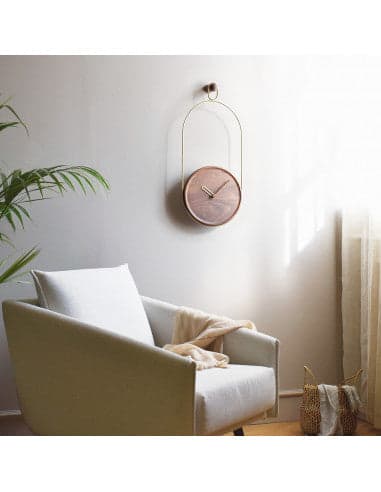
- Wood: warm, quiet and forgiving. Handcrafted wooden dials pair beautifully with earthy interiors, rattan, linen and indoor plants. Our clocks collection features wood-burned detailing you simply cannot get from mass production.
- Metal: crisp and architectural. A metal case clock suits modern apartments, offices and rooms with glass and stone. Explore the metal clock collection for oxidised and brushed finishes.
- Mixed media: resin, brass inlays and hand-painted accents make each piece one of a kind, ideal when the clock is meant to be the centrepiece of the wall.
Room-by-room recommendations
Living room
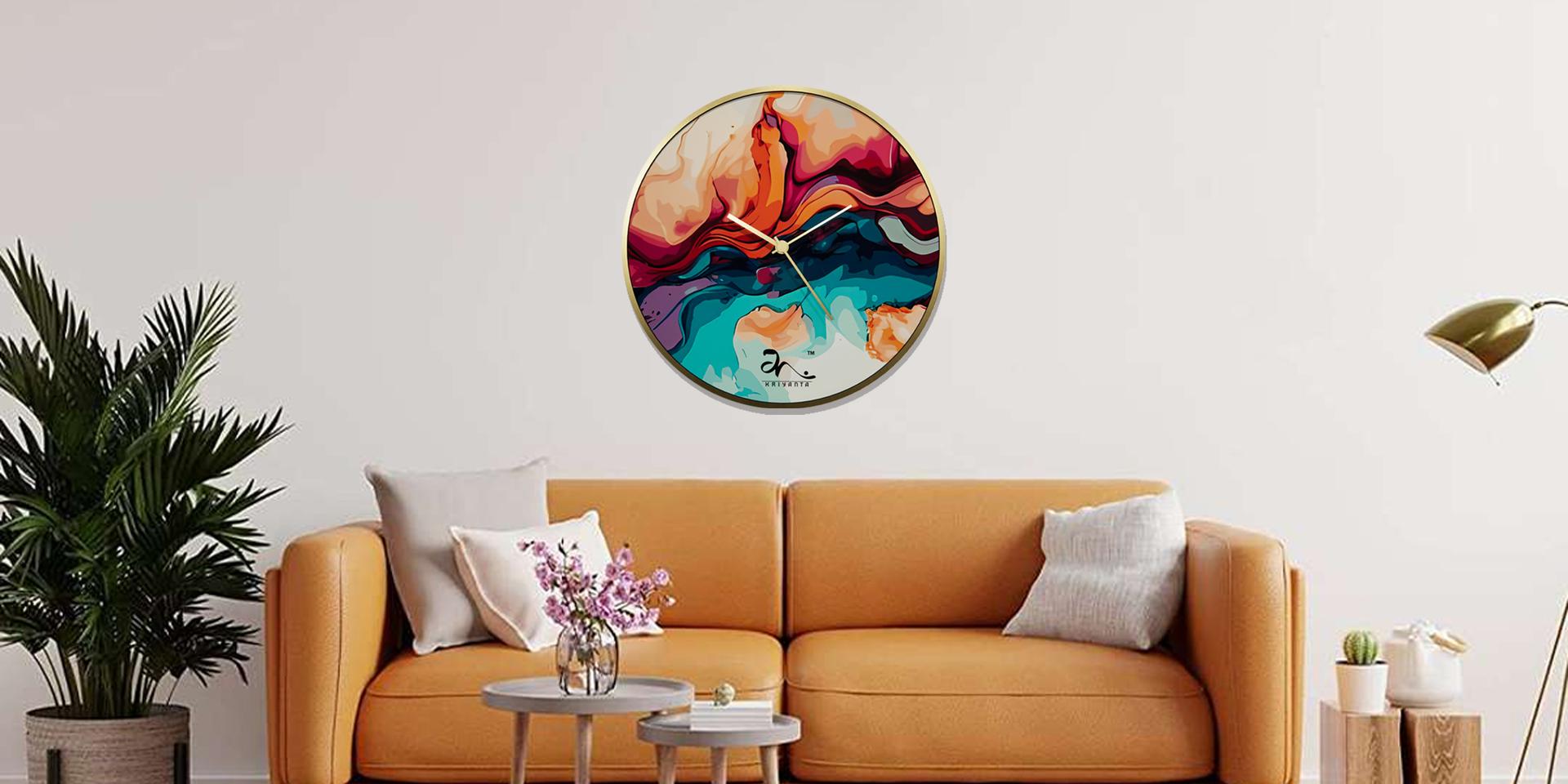
This is the showpiece wall, so let the clock earn it. A large statement dial, 18 inches or more, in wood or a vintage metal case works best above a sofa or console. If your decor leans traditional, a heritage motif like those in the peacock clock collection adds an Indian craft signature that guests always notice.
Bedroom
Choose silence first. A sweep or non-ticking movement matters more here than looks. Keep the dial soft: muted wood tones, no high-shine metals that catch morning light. A 10 to 14 inch clock opposite or beside the bed, never directly above the headboard, keeps the room restful.
Kitchen and dining
Pick a clock that shrugs off steam and splashes: sealed wood or powder-coated metal, with an easy-to-wipe dial. Bold numerals help when you are timing three things at once. Round shapes soften the hard lines of cabinets and appliances.
Study and home office
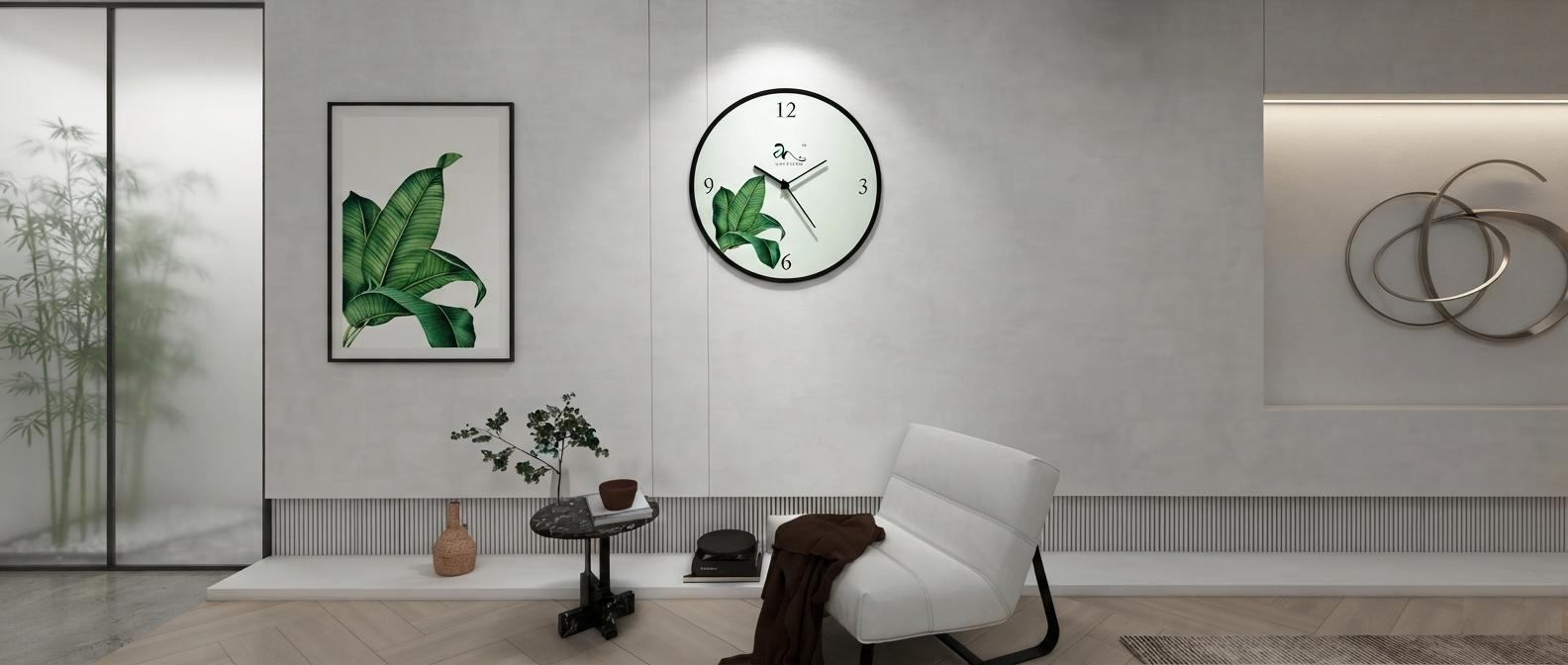
A modern, minimal dial keeps the wall calm during video calls, and it reads well on camera. The modern clock collection has clean geometric cases made for exactly this wall. For a personal touch, a customized modern clock with a name or founding date makes a fine desk-side companion, and an even better gift for a new office; pair it with ideas from the office warming collection.
 The Round Shape Wooden Wall Clock, ₹4,350: hand-finished natural grain that suits living rooms and studies alike.
Hanging height and placement rules
Three placement rules cover almost every situation:
- Eye level wins. The centre of the dial should sit around 57 to 65 inches from the floor, the same standard galleries use for art.
- Respect furniture. Above a sofa, console or sideboard, leave 6 to 10 inches between the furniture and the bottom of the clock.
- Give it air. A clock needs empty wall around it. If the wall already carries a gallery of frames, either make the clock part of the grid or move it to its own wall. Our wall arts collection pairs well with clocks when you plan both together.
Vastu-friendly clock placement
Many Indian homes follow Vastu when placing clocks, and the guidance is easy to work with. North and east walls are considered most auspicious, as these directions are associated with prosperity and new beginnings; south walls are generally avoided. Keep clocks running and accurate, and repair or replace a stopped clock quickly, since a dead clock is considered stagnant energy. Whatever your view on Vastu, the practical outcome is good design: north and east walls in most Indian layouts receive pleasant indirect light that makes dials easy to read.
Caring for a handcrafted clock
Handmade pieces reward gentle habits. Dust the dial weekly with a dry microfibre cloth, keep wooden clocks out of direct afternoon sun to prevent fading, and change the battery once a year rather than waiting for the hands to stop. Avoid hanging any clock above a heat source like a kitchen hob. Conservation guidance from the Victoria and Albert Museum on wooden objects makes the same point in stronger terms: stable humidity and gentle, dry cleaning are what keep wood beautiful for decades (V&A: caring for wooden objects).
The takeaway
Choose the wall first, then the size, then the material, then the room's personality. A living room can carry a statement, a bedroom wants silence, a kitchen needs practicality, and a study looks best kept minimal. Get those four decisions right and a single handcrafted clock will quietly improve every day in that room for years.
Begin with the Clocks collection, or browse the Bestsellers to see what other homes chose first.
Notes from the workshop
New handcrafted pieces, decor guides and gifting ideas, straight from our artisans.
Explore Bestsellers